Showing posts with label Prodigal Son. Show all posts

Monday, 14 May 2012

God of Conversion: Hope in a Prodigal World


by Alan Paton

The first time I visited a Manila shantytown I was twenty six, despite having grown up in the Philippines. Manila to me was an endless expanse of uptown malls, hotels and amusement parks. I rarely entered the old city of Manila, and the riverside sprawls were alien to my senses. I was not shocked when I finally arrived in the barrio; seven years in England had informed me about what my country was meant to look like from BBC reports of grinding poverty and governmental abuse.  My friends used to ask me how I could stand growing up well off surrounded by so many poor people. Of course, the thing was that I rarely saw any of it. Walls can hide many unsightly truths. Furthermore, the system that allows for the huge differences in wealth within the Philippines is the same one that causes the discrepancy between developed and developing countries. An analysis of this global system of poverty has been extensively commented on by the liberation theologians, economists, sociologists, but none is more powerful a description than Alan Paton's Cry, the Beloved Country.

Friday, 4 May 2012

God of Righteousness: How Good People Affect Us


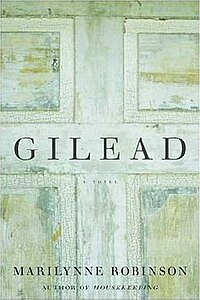
by Marilynne Robinson


   My brother complains that I cannot like a book unless a panel of experts say it is any good. In truth, I do tend to choose the books I read according to prize-winning status. I search through printed lists from the Pulitzer, Booker, Orange, and Costa, hunting for these titles amongst the endangered shelves of local libraries. I salivate when a new shortlist comes out. Unlike the Pavlovian dog, however, my salivation has not been strengthened by regular reinforcement. I tend to find these prize-winning novels to po-mo for their own good. Occasionally though (as with last year's Booker winning The Sense of Ending by Julian Barnes), I come across something really rewarding, and none has better conditioned me than Marilynne Robinson's Gilead. 

Saturday, 23 April 2011

God of Grace: How God Saved a Family


By Evelyn Waugh

In my second year of university, I picked out Brideshead Revisited: The Sacred and Profane Memories of Captain Charles Ryder from the Big Read of the BBC, a compilation of Britain's favourite novels. Brideshead Revisited was the "Catholic classic" in the list, and without further need of convincing, I bought it from Waterstone's 3 for 2 deal along with a A Suitable Boy and A Prayer for Owen Meany. I quickly got into the book as it starts with the kind of heady university experience that I was then undergoing. It moved into a family drama, the characters of which all seemed recognisable to me and my Catholic setting. The decadence of the overprivileged was also immediately familiar, if a little guilt inducing.