Showing posts with label literature. Show all posts

Monday, 14 May 2012

God of Conversion: Hope in a Prodigal World


by Alan Paton

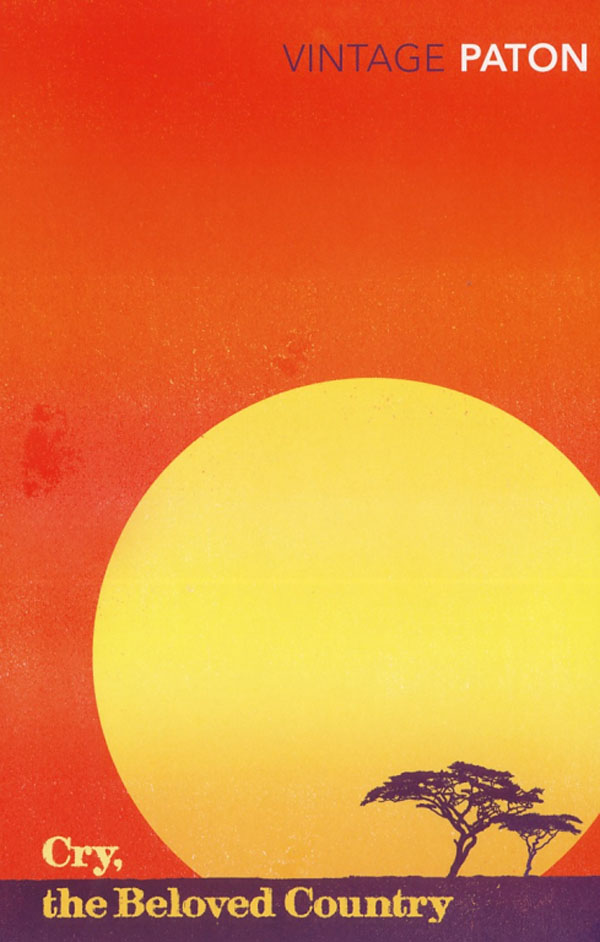
The first time I visited a Manila shantytown I was twenty six, despite having grown up in the Philippines. Manila to me was an endless expanse of uptown malls, hotels and amusement parks. I rarely entered the old city of Manila, and the riverside sprawls were alien to my senses. I was not shocked when I finally arrived in the barrio; seven years in England had informed me about what my country was meant to look like from BBC reports of grinding poverty and governmental abuse.  My friends used to ask me how I could stand growing up well off surrounded by so many poor people. Of course, the thing was that I rarely saw any of it. Walls can hide many unsightly truths. Furthermore, the system that allows for the huge differences in wealth within the Philippines is the same one that causes the discrepancy between developed and developing countries. An analysis of this global system of poverty has been extensively commented on by the liberation theologians, economists, sociologists, but none is more powerful a description than Alan Paton's Cry, the Beloved Country.

Friday, 4 May 2012

God of Righteousness: How Good People Affect Us


by Marilynne Robinson


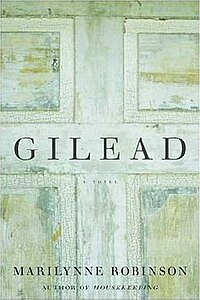
   My brother complains that I cannot like a book unless a panel of experts say it is any good. In truth, I do tend to choose the books I read according to prize-winning status. I search through printed lists from the Pulitzer, Booker, Orange, and Costa, hunting for these titles amongst the endangered shelves of local libraries. I salivate when a new shortlist comes out. Unlike the Pavlovian dog, however, my salivation has not been strengthened by regular reinforcement. I tend to find these prize-winning novels to po-mo for their own good. Occasionally though (as with last year's Booker winning The Sense of Ending by Julian Barnes), I come across something really rewarding, and none has better conditioned me than Marilynne Robinson's Gilead. 

Saturday, 10 September 2011

God of Freedom: The Grand Inquisitor's Fear of Christ's Message

The Brothers Karamazov
by Fyodor Dostoevsky

I felt sick. I was at the British Library when I finally reached the part of this novel known as the Legend of the Grand Inquisitor. I sped through the dialogue, taking up chapter 5: Pro and Contra. Engulfed in the doubt that is a common occurrence in my life, I felt deadened by a relentless assault of painful accusation against the Roman Catholic Church, and specifically against the Jesuits. Several cups of coffee and a good amount of prayer were needed to bring any feeling back, but let me describe the work that brought about such an existential crisis.

Monday, 5 September 2011

God of Smallness: The Little Way in Literature


by Georges Bernanos

I was only slightly surprised when one of my superiors said that they "didn't like" The Diary of a Country Priest, despite its status as a "Catholic classic". After all Jesuits are meant to do great things, aren't we? Jesuit saints go out and baptise the Indies, die in the most gloriously gruesome manners in the Americas, or bring back to the faith to heretic Europe. It is a spirituality of the Magis, "the more" that inspires people to do great things for God. So the diary of a simple parish priest in a French backwater is just less interesting than the lives of many of our brothers in Christ. And I suppose that is the whole point of The Diary.

Wednesday, 27 April 2011

God of Truth: How "reason" might lead to unbelief


by John Updike


Dale, an evangelical graduate student at a New England university, attempts to prove God by using a computer programme, so sure is he that God would show himself in the patterns of the universe. He asks the theology professor Roger Lambert for some money to fund the research. Roger is appalled by the notion, but out of some kind of seeming interest he decides initially to fund the research. Meanwhile, Roger is reintroduced to his niece Verna, who is a friend of Dale, and Roger feels an attraction to the 19 year old black sheep of his family.

Saturday, 23 April 2011

God of Grace: How God Saved a Family


By Evelyn Waugh

In my second year of university, I picked out Brideshead Revisited: The Sacred and Profane Memories of Captain Charles Ryder from the Big Read of the BBC, a compilation of Britain's favourite novels. Brideshead Revisited was the "Catholic classic" in the list, and without further need of convincing, I bought it from Waterstone's 3 for 2 deal along with a A Suitable Boy and A Prayer for Owen Meany. I quickly got into the book as it starts with the kind of heady university experience that I was then undergoing. It moved into a family drama, the characters of which all seemed recognisable to me and my Catholic setting. The decadence of the overprivileged was also immediately familiar, if a little guilt inducing.

Thursday, 7 April 2011

God of Renewal: The Pope's Conversion

by Morris West


General confusion exploded in the Catholic blogosphere at Pope Benedict's comments which might be summarised as "It is better for a male prostitute to use condoms". Some saw it as a kind of conversion towards a more humane way at looking at morality, while others felt it was a continuation of the moral reasoning always evident in Ratzinger. Some felt betrayed and disappointed by the man they proudly monikered "the Church's Rottweiler". Has our pope gone soft?

Wednesday, 30 March 2011

God of Dreams: Coelho's Guide to Discernment


by Paulo Coelho

17. I was in London, supposedly reading up for my International Baccalaureate Extended Essay on the symbolic nature of the gypsy in Victorian Literature while staying at my brother's East End flat. Without a book to read, hours passed boringly as I waited for my brother to get out of bed, so we could explore the wondrous streets of London. One evening at a dinner party in Kensington, I met up with my friends from high school who were touring Europe. When I told them of my predicament, one of them took out a little book which she said was amazing and that it was life-changing and that it was easy to read while gallivanting, being of simple language. That book was The Alchemist by Paulo Coelho.

Monday, 14 March 2011

God of Colour: The Liberation of Love


by Alice Walker

I do not believe I ever pictured a face for God the Father. I did have a sense of the Father, and He did not have the closeness of a face-to-face encounter. He was more distant, without image, but with a kind of feeling. I suppose that feeling was dread. What He felt most like came from a scenario from my childhood. I remember when my dad used to come home for his afternoon siesta, we were asked not to play too noisily as this would wake up my father, and my mother warned that he would be very angry indeed. However, my father never came out, thumping down the stairs, shouting in berserk, even when we were noisy; he was much more fearsome in my imagination than in reality. God the Father was that person to me as well, a bearded snoring man, sleeping upstairs who could possibly swoop down on us in a whirling rage if we were ever too noisy or naughty.

Thursday, 3 March 2011

God of Flourishing: How Tolstoy Wants You to Live Your Life

by Leo Tolstoy

My serious intellectual pretensions as a fourteen year old meant that, when browsing through a Manila bookshop and exhausted by my family's marathon shopping trip, Anna Karenina was an obvious choice. I knew of Tolstoy from his infamously long novel and historical study War and Peace, which was, I conceived, the ultimate must-read for any aspiring literary snob. And though there it sat on the retail shelf, its skyscrapering reputation and formidable size overwhelmed my teenage head. Next to it, however, sat a shorter, though still sizable, novel with a beguiling black-haired beauty on its cover. I believed this would be the novel that would get me acquainted to the particularly heavy flavour of Russian literature. When I parted the hallowed leaves of fresh paper, I soon realised that this was no appetiser. Almost from the first tasty bite of the novel's famous first sentence, I realised I was at a literary Circe's banquet, and I would never want to escape.

Sunday, 27 February 2011

Do Hobbits go to Heaven?

People look upon the same world but see different things, they live through the same events but experience them differently, they meet the same people but have different reactions to them. This is principally due to their differences in social background, education, race, religion, etc. All these factors provide a different hermeneutic framework for interpreting reality and come together to form a narrative of the world, a story of the universe which motivates and justifies our dealings with day-to-day situations. One hugely influential factor on both our personal and national narratives are the underpinning moral examples and stories of history or legend.

Saturday, 26 February 2011

Novel Conversations: A List of Religious and Spiritual Literature

I become light-headed remembering those exchanges, those conversations that make the rest of life seem like meaningless rubbish in comparison. I am recalling the ecstatic drunkenness of the slow and succulent embibing of another, those dialogues when heart speaks to heart that have been the most profound religious prayer I have shared. Our dear spiritual father Ignatius often encouraged the practice of spiritual conversation as ministry, acknowledging the intensity of faith that such an experience can inspire. I have always been more than happy to take on Ignatius's suggestions. But these intense meetings are not common, so what can we do to help us between them? My advice, read. If the brilliant American novelist Jonathan Franzen is right, some of the best and deepest conversations we can share are those we have with the narrators and characters of novels.